

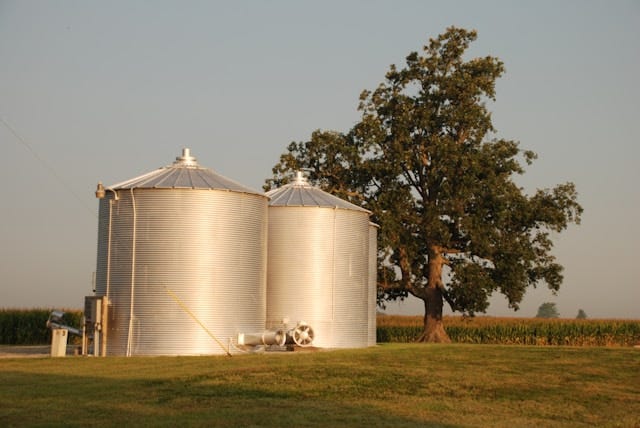
The International Energy Agency is quite excited about the potential of biogas. It believes that about 900 billion cubic meter of biogas could be produced annually, roughly 20 percent of the global consumption of natural gas. Most of this potential is located into countries like India and Brazil.
Biogas seems to be an attractive option, especially in a time where natural gas supply are heavily impacted by geopolitical tensions. In 2025 the Middle East produced about 780 billion cubic meters of natural gas, 18 percent of global production.
Since the start of the Iran War and the subsequent blockade of the Strait of Hormuz has removed Qatar, the main export of natural gas in the region, from the market. And if even the Strait of Hormuz will be reopened today, at least 17 percent of its natural gas infrastructure has been damaged, which will take years to repair.
Biogas will enable countries to diversify their gas supplies and hence reduce their dependency from geopolitically unstable regions. The availability of the biogas feedstock in the global south is of particular interest.
Another reason why some people might be excited by biogas is that this energy source will provide a form of renewable energy that is dispatchable. In other words biogas could fill in the gaps when the sun does not shine and the wind does not blow. At least that is the theory.
As usual I am very skeptical about claims made by the IEA. The potential of replacing about a fifth of our global natural gas consumption with a renewable source sounds great, but is wrought with serious challenges.
The issues with biogas
It is important to know that biogas has to be created and that we can use several types of feedstock:
crop residues
animal manure
municipal solid waste
sewage sludge
This diversity is both a benefit as a serious challenge. One will need to set up a complex logistical system to collect and convert this biomass into gas. Christoff Burger from PowerUp list the following problems with biogas:
high initial investment
technical operational challenges
availability and logistics of feedstock
environmental concerns
These factors will determine the economic feasibility of a particular biogas project. In some cases the economics will work out, in others it will not. Consequently I think it’s very unlikely that we will ever come close to realizing the full 900 bcm potential.
Another issue with biogas is that it contains impurities that lower the caloric value of the gas. One could purify biogas to obtain biomethane but this requires substantial amounts of energy. So paradoxically biomethane might have a higher energy content than biogas but is energy return on investment will be lower.
Biomethane can serve as a drop-in replacement of natural gas but from an energy system perspective, it will not be possible to achieve to replace 20 percent of current natural gas consumption with biogas.
While biogas is not a silver bullet to solve the intermittency problem of wind and solar power nor will significantly reduce our dependency of unstable natural gas producers, it will have its use cases.
Especially in locations where feedstock is available in high amounts biogas can make sense. Also biogas could be used as a backup energy source. The best way would to use biogas in a combined heat cycle and use the residual heat to feed a district heating network.
Focus on reducing natural gas consumption
Natural gas is primarily used for electricity generation and heating. Cooking is a small portion of natural gas consumption and most easily replaced by electric cooking.
In order to reduce our dependency of unreliable suppliers of natural gas we would do best to reduce our overall consumption of this fuel. For electricity we would best served by investing in nuclear and enhanced geothermal power supplemented with wind and solar power.
We could use power-to-gas technology to convert excess wind power into methane for use as an emergency backup or to supply those few application where gas is yet hard to replace.
Residential heating has several option to remove natural gas. Many people are already familiar with heat pumps but other more efficient options are available as well. Geothermal energy could be used to feed a district heating system.
Another option would be to store summer heat in subterranean sinks for use in winter, a technology known as aquifer thermal energy storage or ATES. Combining ATES with district heating will not only cut off natural gas use both will also provide cooling during hot periods.
Conclusion
While biogas can be interesting in certain cases, the excitement of the IEA is probably exaggerated. Scaling up biogas production will depend on many smaller projects with highly variable commercial viability.
Therefore the supply of biogas will both limited and mostly restricted to certain areas. Hence the impact of biogas on the price of natural gas will very limited.
Increasing energy security around the world still requires the use of several energy technologies, including nuclear and geothermal power. The best approach will vary from community to community.